
Search Wisconsin Marriage Records
Wisconsin Marriage Records are easiest to search when you split the work by record type and office. A marriage license starts with a county clerk. A filed marriage certificate usually moves through a register of deeds or the Wisconsin Vital Records Office. Older Wisconsin Marriage Records often shift again, this time to the Wisconsin Historical Society and its pre-1907 index. If you know the county, the year, and whether you need a license rule or a certified copy, the state gives you a clear path. That makes Wisconsin Marriage Records much easier to request without guessing.
Wisconsin Marriage Records Overview
Wisconsin Marriage Records Basics
The broad state map starts with the Wisconsin Vital Records Office portal, which explains that Wisconsin Marriage Records can be requested through the state office, local register of deeds offices, and in some cases the Milwaukee and West Allis city health offices. That matters because a statewide search is not always a state-only search. Many people can handle Wisconsin Marriage Records through a county office first, then use the state office when they need a wider search, mailed service, or a fallback path. The state portal also frames the work clearly. It treats marriage certificates as vital records, not as court files, and that keeps the request on the right track.
The county side matters just as much. Wisconsin has a register of deeds office in every county, and the Wisconsin Register of Deeds Association explains that these offices maintain both land records and vital records, including marriage records. That office structure is the backbone of Wisconsin Marriage Records access. County clerks handle the license side. Registers of deeds handle most copy requests after the marriage is filed. If the year is modern and the county is known, the search often stays local. If the year is older or the county is uncertain, the search usually expands to the state office or the historical collections.
Lead-in to the main Wisconsin vital records portal: the official DHS page at dhs.wisconsin.gov/vitalrecords/index.htm is the starting point for statewide Wisconsin Marriage Records guidance.
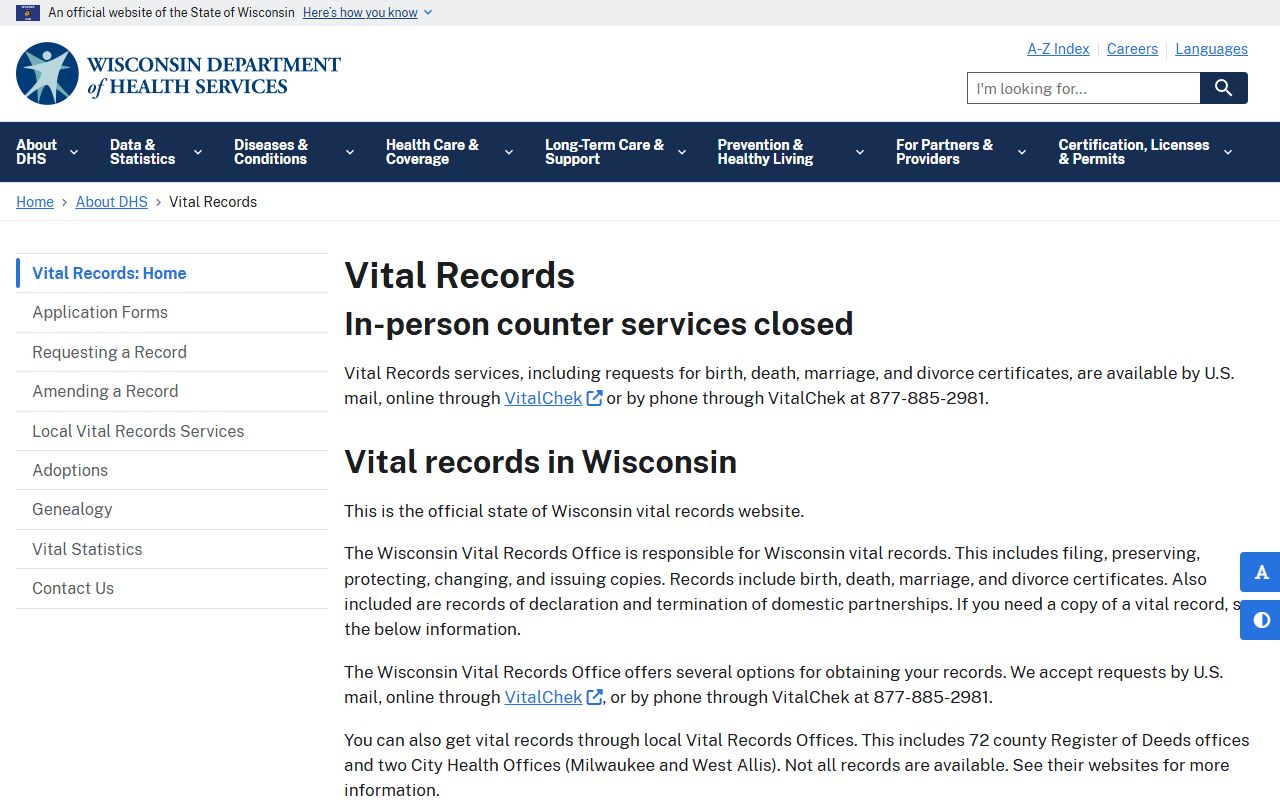
That image works as the statewide hub because it points to the state office, county offices, and the local routes used for Wisconsin Marriage Records requests.
Lead-in to the register of deeds overview: the statewide register association page at wrdaonline.org explains why county register offices remain central to Wisconsin Marriage Records.
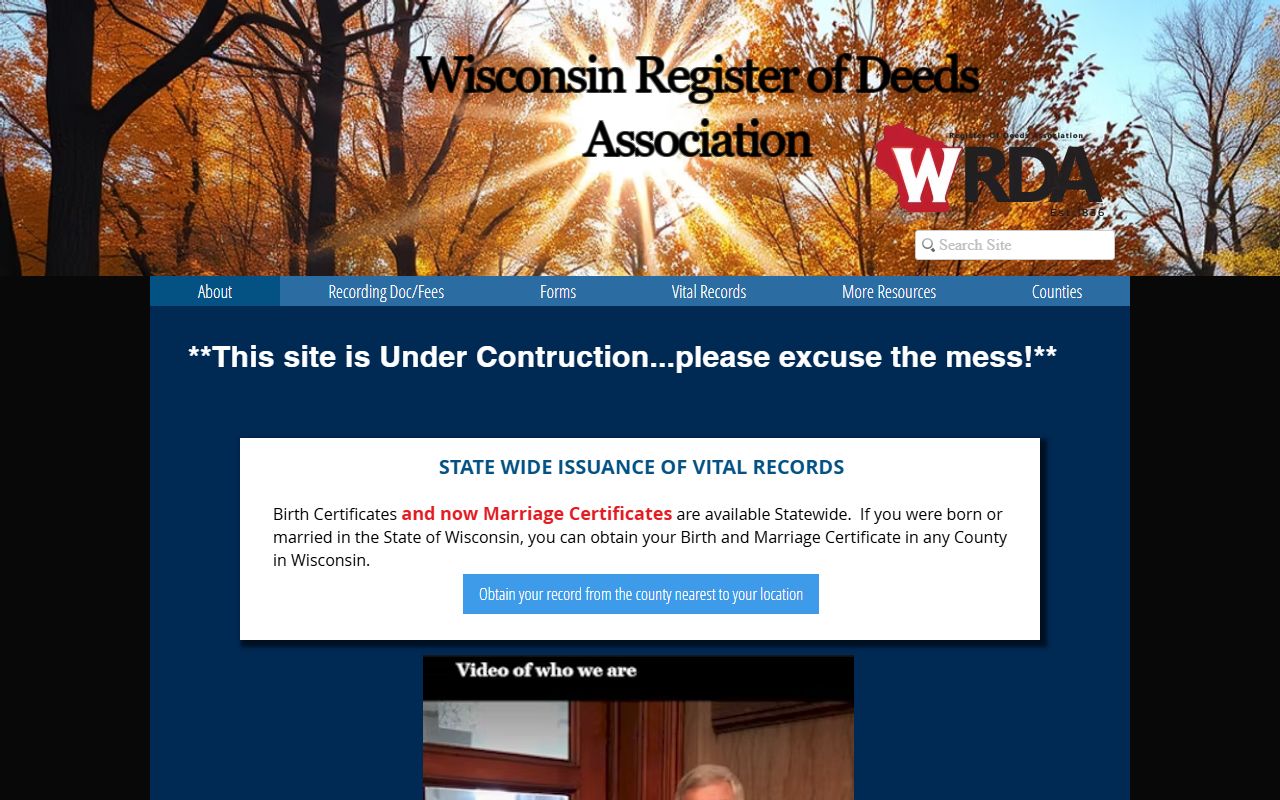
That image helps because it ties Wisconsin Marriage Records to the county office system that most requesters use first.
Note: Wisconsin Marriage Records requests move faster when you decide first whether you need a marriage license rule, a filed certificate, or a pre-1907 historical search.
Wisconsin Marriage Records Search
The best Wisconsin Marriage Records search starts with the request instructions page rather than a random search engine. The state instructions explain which records are available from October 1907 forward, how mail requests work, what identification is accepted, and what happens if the state cannot find a record. That is useful for any search, but it becomes especially important when the name is common or the year is rough. Wisconsin itself says common last names need more identifying detail, such as the spouse name or county. That one point can save a failed search. It also explains why Wisconsin Marriage Records requests should include more than a name whenever possible.
The application-forms page is the next practical stop. It holds the official mail forms and phone-order guidance without making you guess which document belongs to a marriage request. That matters when you want Wisconsin Marriage Records by mail and do not want a weak third-party form. The page also points back to VitalChek for online and phone requests, but the state forms still anchor the process. If the request is simple and you know the event was filed after October 1907, those state forms can carry the request from start to finish. If the county is known, they can also be used beside a county register page to keep the wording and ID rules consistent.
Lead-in to the request instructions page: the state directions at dhs.wisconsin.gov/vitalrecords/record.htm explain the main Wisconsin Marriage Records request routes.
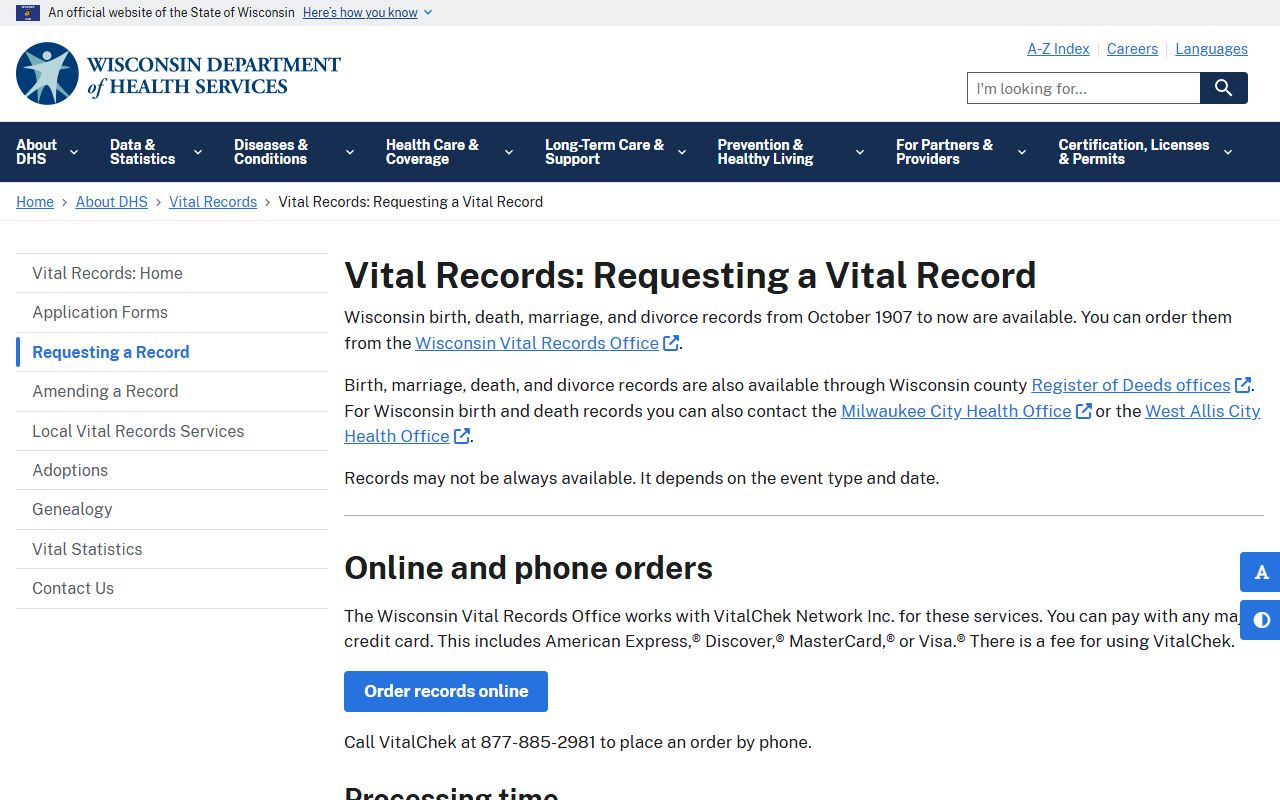
That image is useful because it gathers the mail, online, phone, fee, and identification rules that shape most Wisconsin Marriage Records requests.
Lead-in to the official forms page: the state applications page at dhs.wisconsin.gov/vitalrecords/applications.htm is where Wisconsin Marriage Records mail forms are kept.
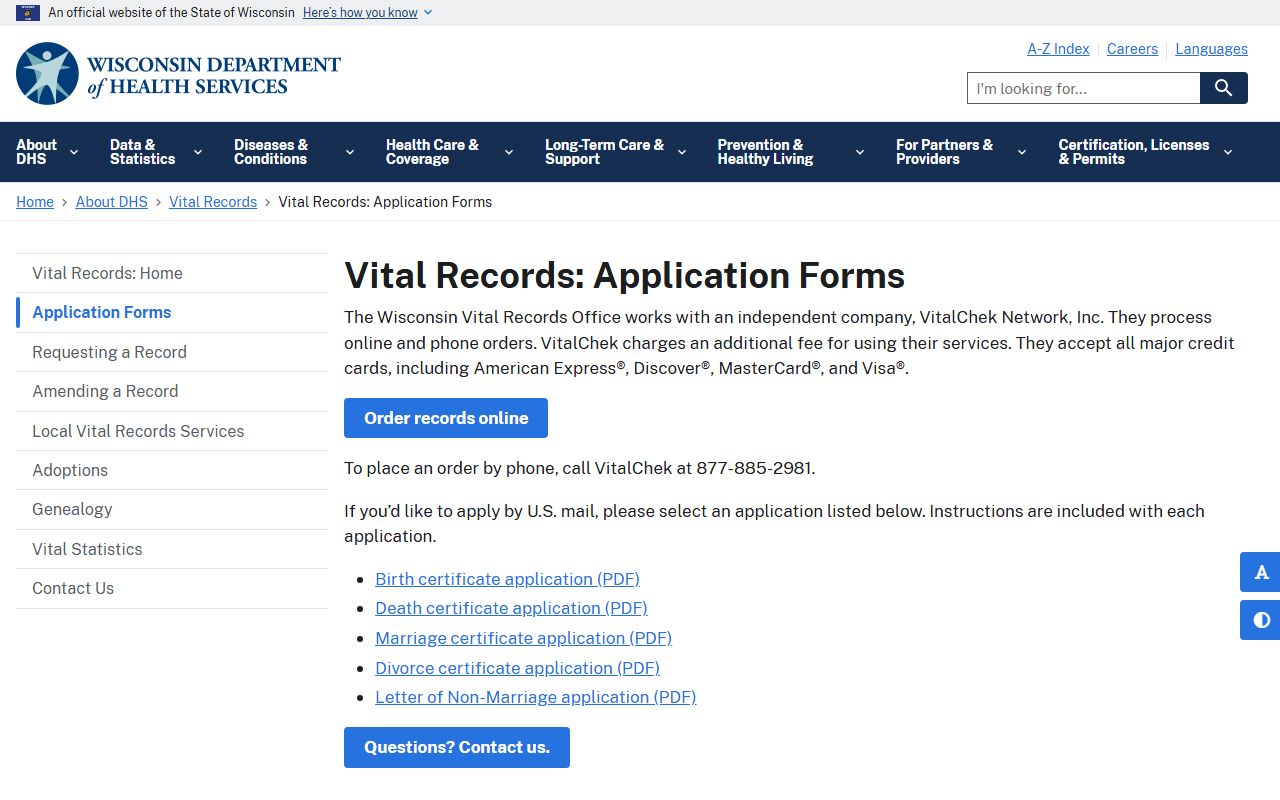
That image fits the search section because it points to the state forms that keep a Wisconsin Marriage Records request clean and official.
Lead-in to the county example page: Brown County's marriage page at browncountywi.gov shows the license rules that county clerks apply across Wisconsin.
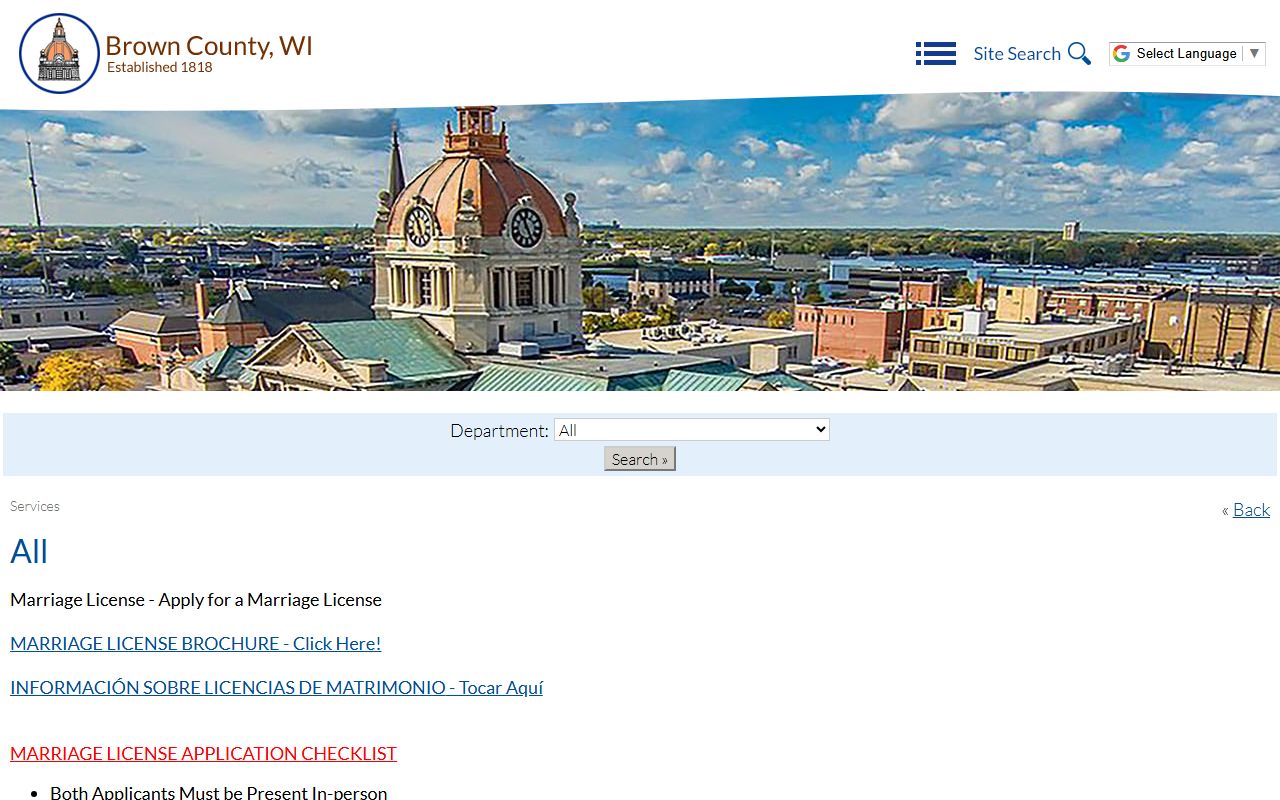
That image gives the search section a concrete county example, showing how Wisconsin Marriage Records begin on the license side before the certificate reaches the register office.
Wisconsin Marriage Records Access
Wisconsin Marriage Records have clear access rules, and the statutory pages matter because county and state offices follow the same framework. Section 69.20 defines who has direct and tangible interest in a vital record and explains that some statistical or restricted information is not open to everyone. Section 69.21 explains how certified and uncertified copies can be issued. Section 69.22 sets the fee structure, including the standard first-copy fee and the additional-copy amount. Read together, those three pages explain why some Wisconsin Marriage Records requests move easily while others need better identification, more exact event data, or proof of relationship or legal purpose.
The same access framework also explains the split between certified and uncertified records. A certified copy is the legal document. It is printed on approved paper with the required seal and issuing details. An uncertified copy can still be useful for research, but it cannot fill the same legal role. Wisconsin Marriage Records before October 1907 follow another path again, because the statutes allow broader access to older uncertified records while newer certified records stay tied to direct and tangible interest. That difference matters for genealogy, for legal use, and for simple name searches where a person may not be entitled to the post-1907 certified record.
Lead-in to the access statute: Wisconsin Statute 69.20 sets the disclosure rules that shape Wisconsin Marriage Records access.
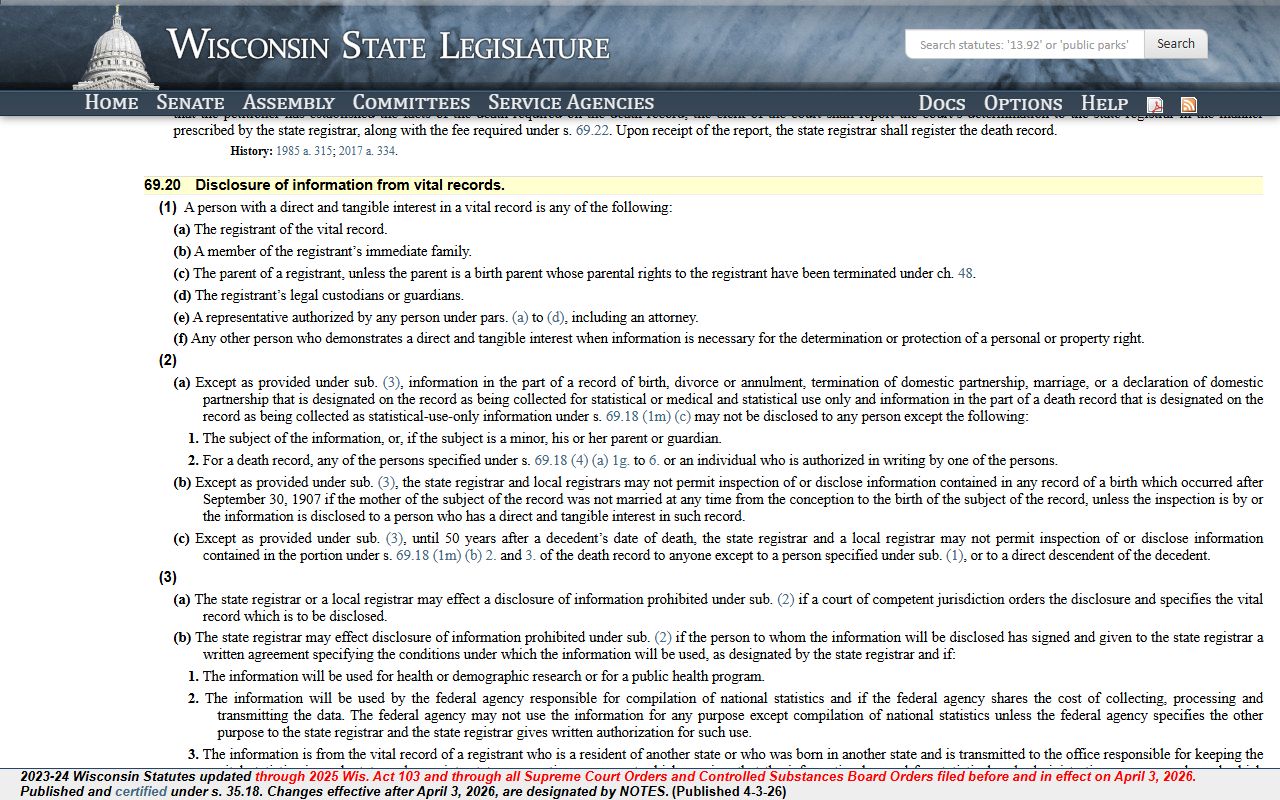
That image matters because it shows why direct and tangible interest is central to many Wisconsin Marriage Records requests.
Lead-in to the copy-issuance statute: Wisconsin Statute 69.21 explains how certified and uncertified Wisconsin Marriage Records copies are issued.
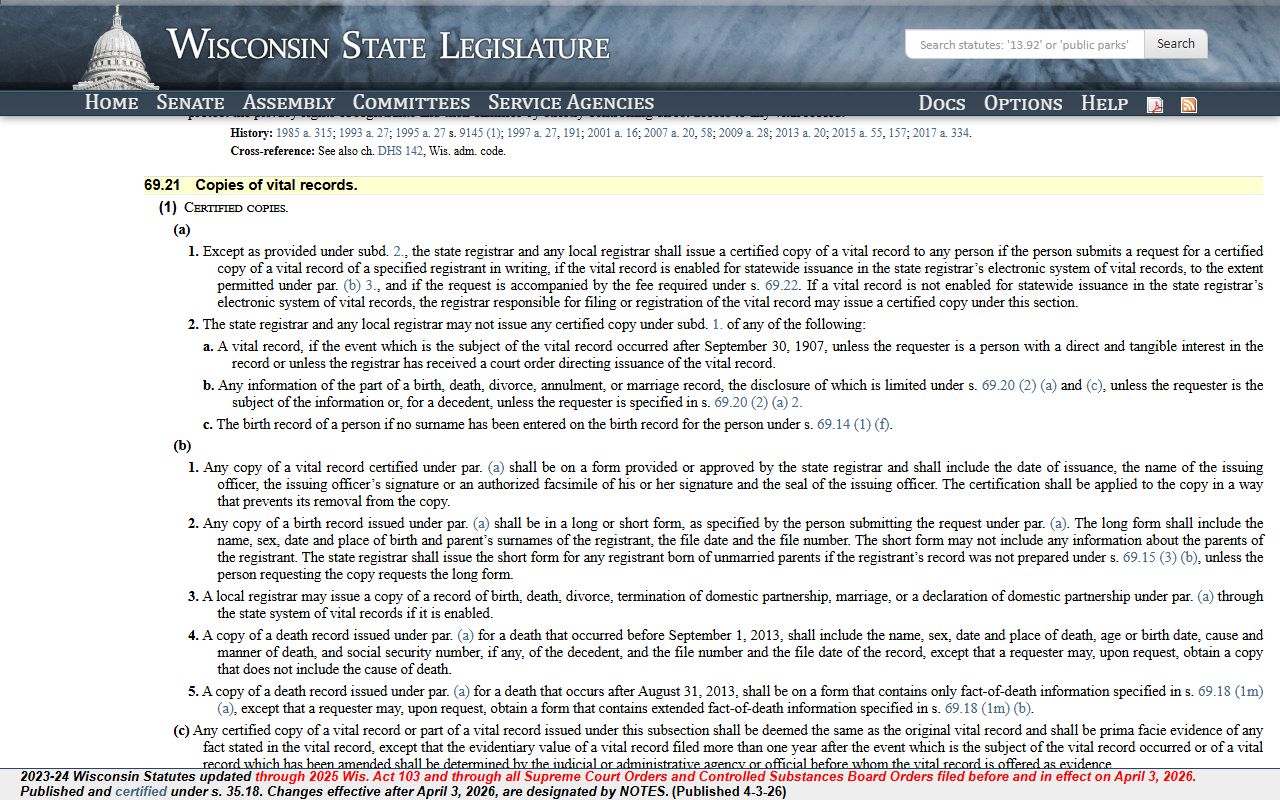
That image helps because it connects the type of copy you need to the rules the registrar must follow before release.
Lead-in to the fee statute: Wisconsin Statute 69.22 sets the copy and search fees for Wisconsin Marriage Records.
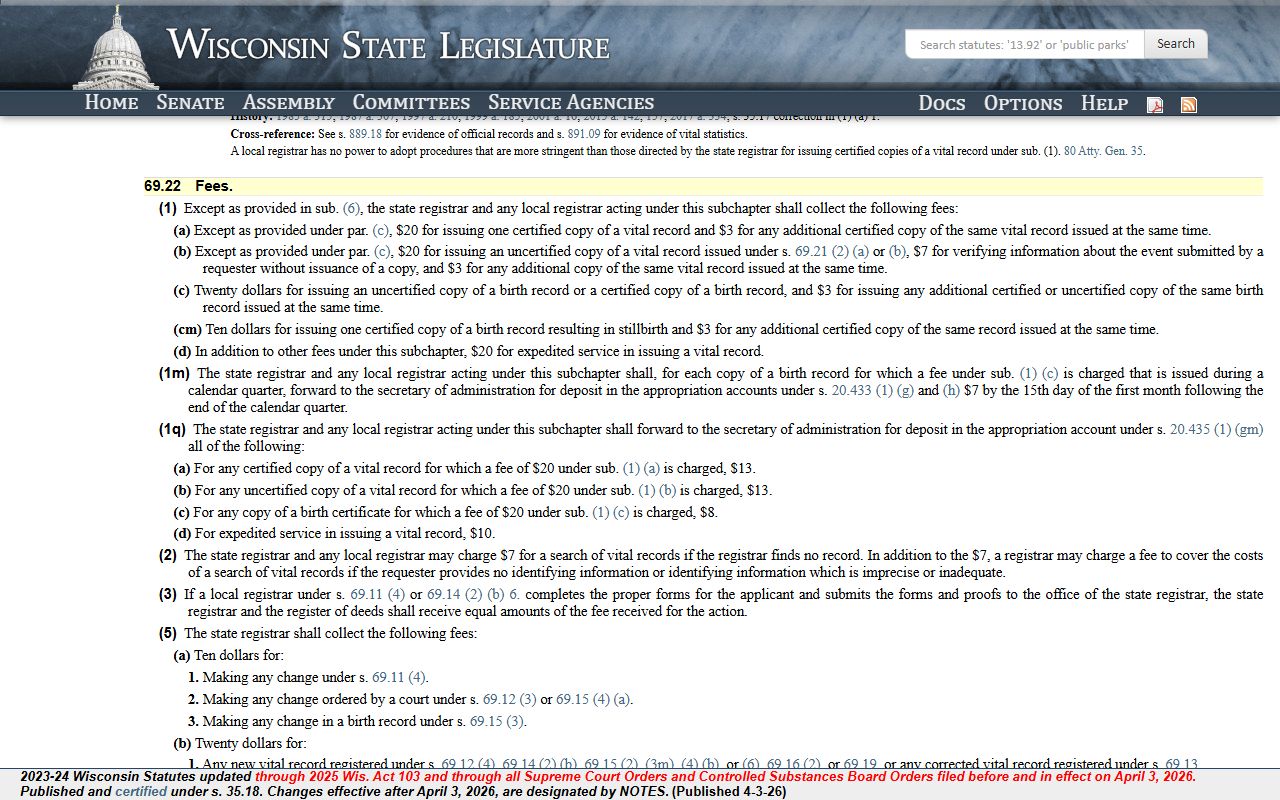
That image gives the fee side real context, showing why Wisconsin Marriage Records copy costs repeat from office to office.
Note: Wisconsin Marriage Records requests are much easier when the requester matches the ID rule, the access rule, and the record year before ordering.
Wisconsin Marriage Records Law
Wisconsin Marriage Records also depend on a narrow but important statutory rule set. Section 69.16 covers the form and registration of marriage documents and explains what happens if a marriage document is missing long after the event. That delayed-registration rule matters when a marriage occurred in Wisconsin but no marriage document reached the system. It is not the normal request route, but it becomes important when a researcher or family member reaches a dead end and needs to know what legal path exists to establish the record. Wisconsin Marriage Records questions can cross into court territory at that point, even though the routine copy process usually stays with registrars.
The court search pages are helpful here as background tools rather than as the main record source. WCCA is the public circuit-court portal. WSCCA is the appellate counterpart. Most Wisconsin Marriage Records requests will never need either one. Still, they matter when a delayed registration, a record dispute, or a related court question appears. The state research makes clear that WCCA and WSCCA cover only open parts of case files and are not substitutes for the vital record itself. They are support tools. The marriage certificate still comes from the registrar side, not from those search portals.
Lead-in to the marriage-document statute: Wisconsin Statute 69.16 explains how Wisconsin handles marriage-document registration and delayed filing.
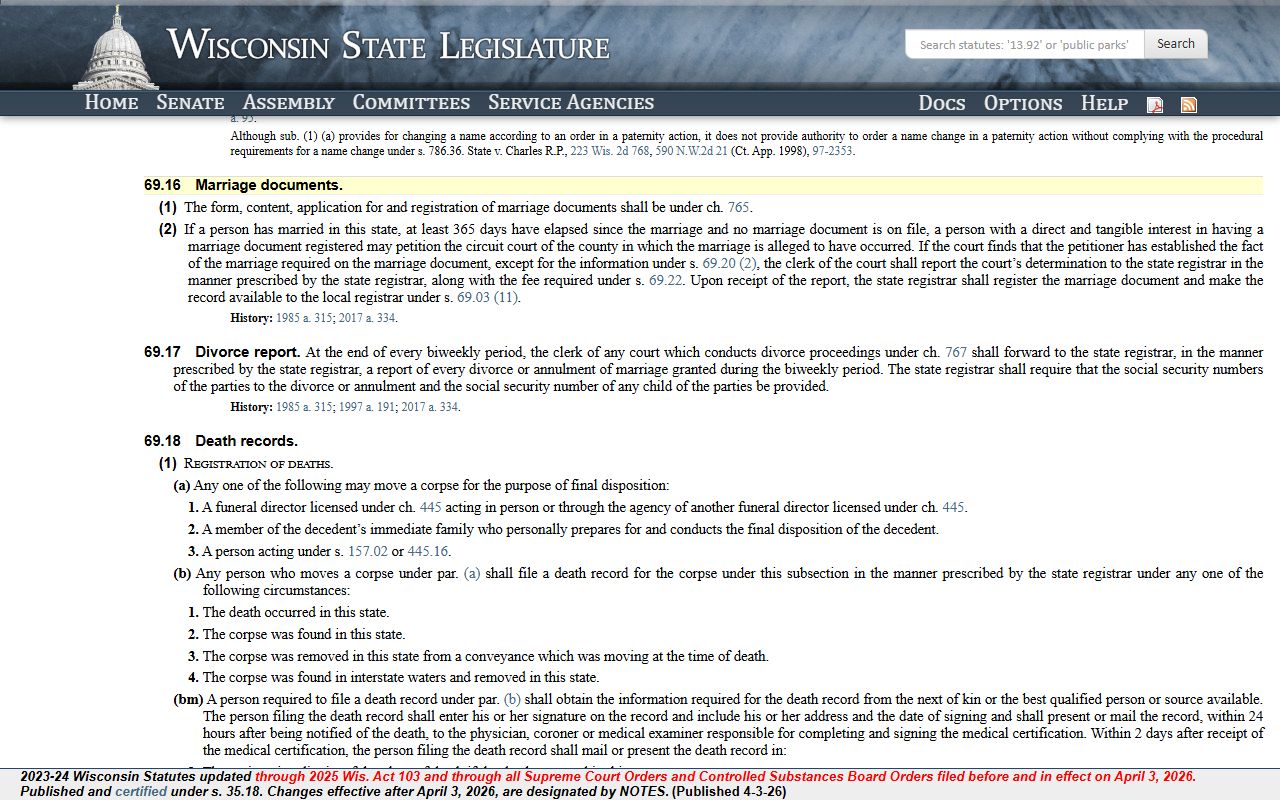
That image belongs here because it shows the legal fallback when a Wisconsin Marriage Records filing problem reaches beyond a routine certificate request.
Lead-in to the circuit-court portal: wcca.wicourts.gov is the state court search system that can support Wisconsin Marriage Records questions when a court issue appears.
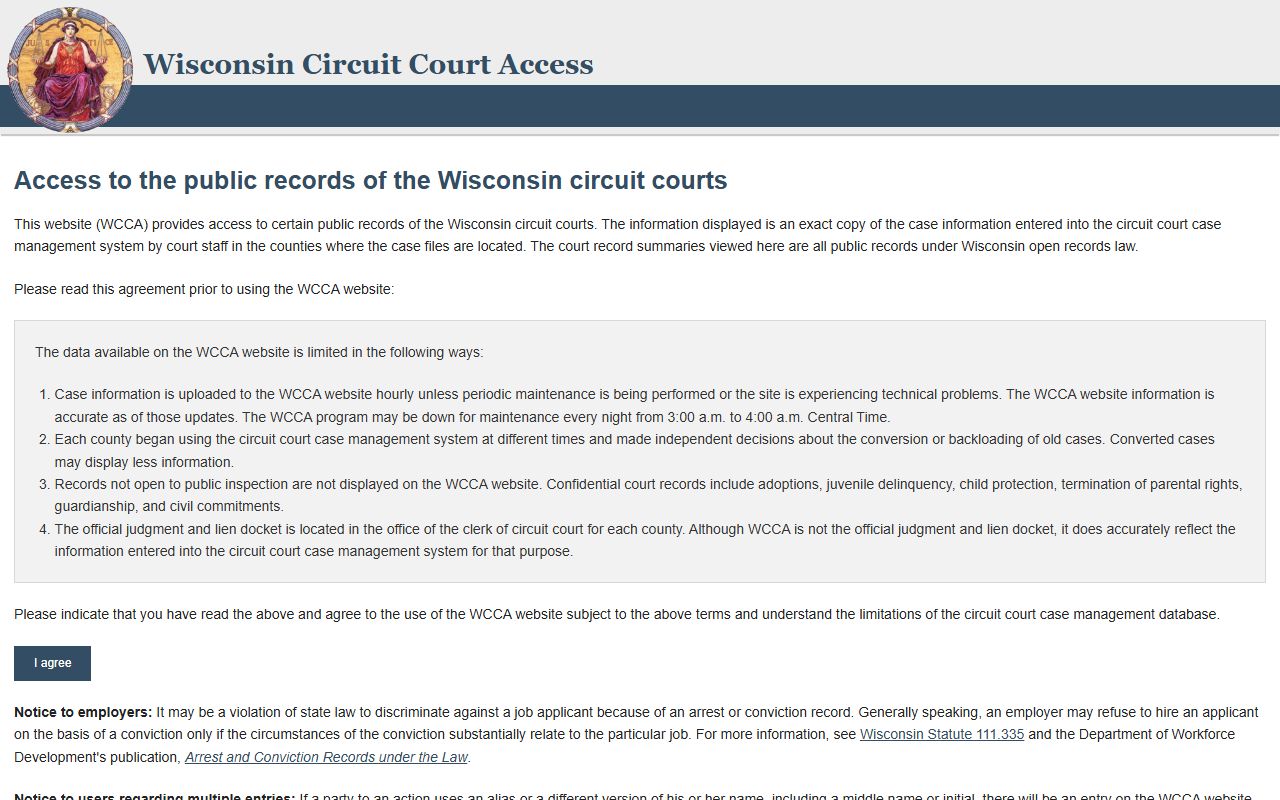
That image is useful because it frames WCCA as a support search tool rather than the primary source of Wisconsin Marriage Records.
Lead-in to the appellate portal: wscca.wicourts.gov is the related Supreme Court and Court of Appeals system for open appellate case information.
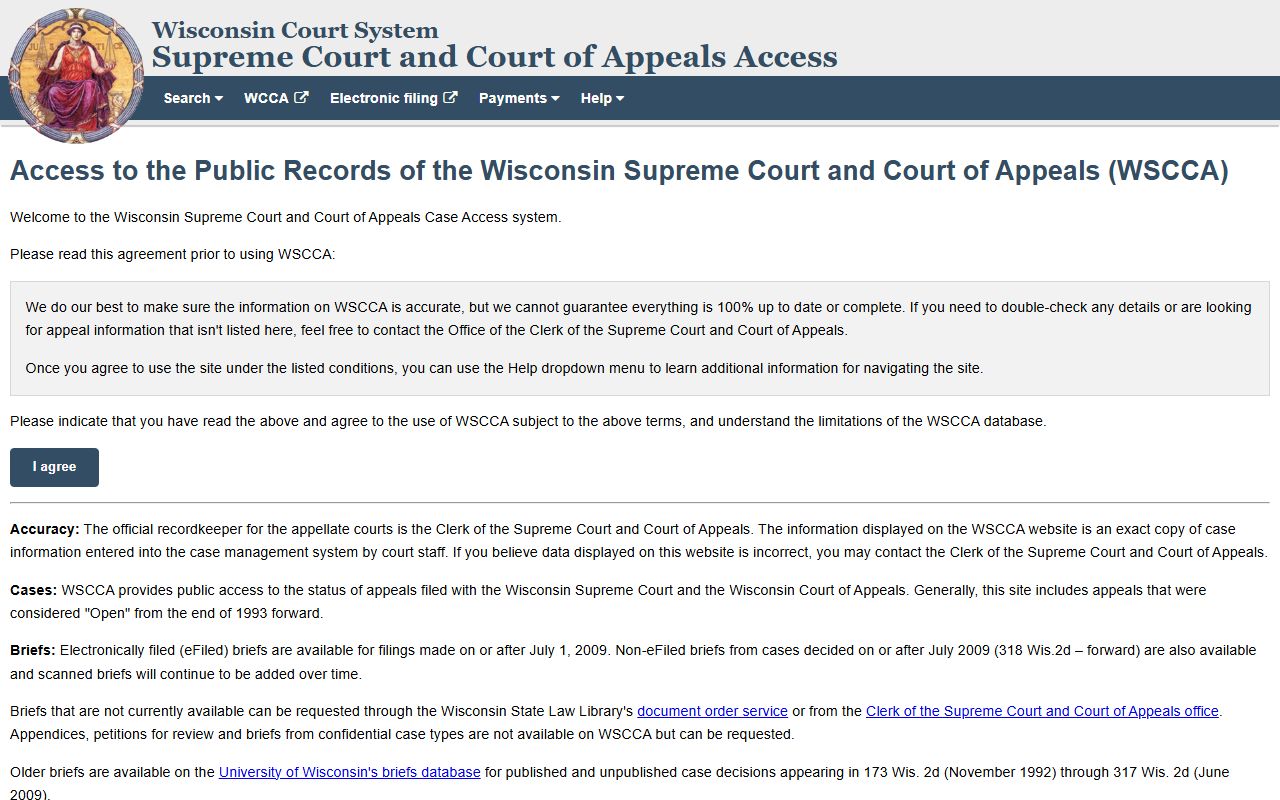
That image helps round out the legal section by showing the other court search path that may matter in a narrow Wisconsin Marriage Records dispute.
Wisconsin Marriage Records History
Older Wisconsin Marriage Records require a different search rhythm. The state research makes that clear. Records before October 1, 1907 often belong in the Wisconsin Historical Society system, not in the regular modern vital-record request path. The Society says state-level marriage registration was required much earlier, but enforcement improved later, so coverage is uneven in the earliest years. That is why a historical search can take more care than a modern one. A county record may exist. A state-level pre-1907 record may exist. Or both may exist. Wisconsin Marriage Records research works best when you use the index first and then move to the film location or copy option.
The state genealogy page adds another piece. It explains that the Wisconsin Vital Records Office does not publish its records or indexes online and that in-person research is appointment-based. That is important because many people expect a direct state database. Wisconsin Marriage Records do not work that way at the state level. Instead, the state office offers formal request paths and supervised research access, while the Wisconsin Historical Society provides the searchable pre-1907 index and research guidance for older marriages. Those two routes work together. They do not replace each other.
Lead-in to the state genealogy page: the DHS research page at dhs.wisconsin.gov/vitalrecords/genealogy.htm explains how in-person Wisconsin Marriage Records research works at the state office.
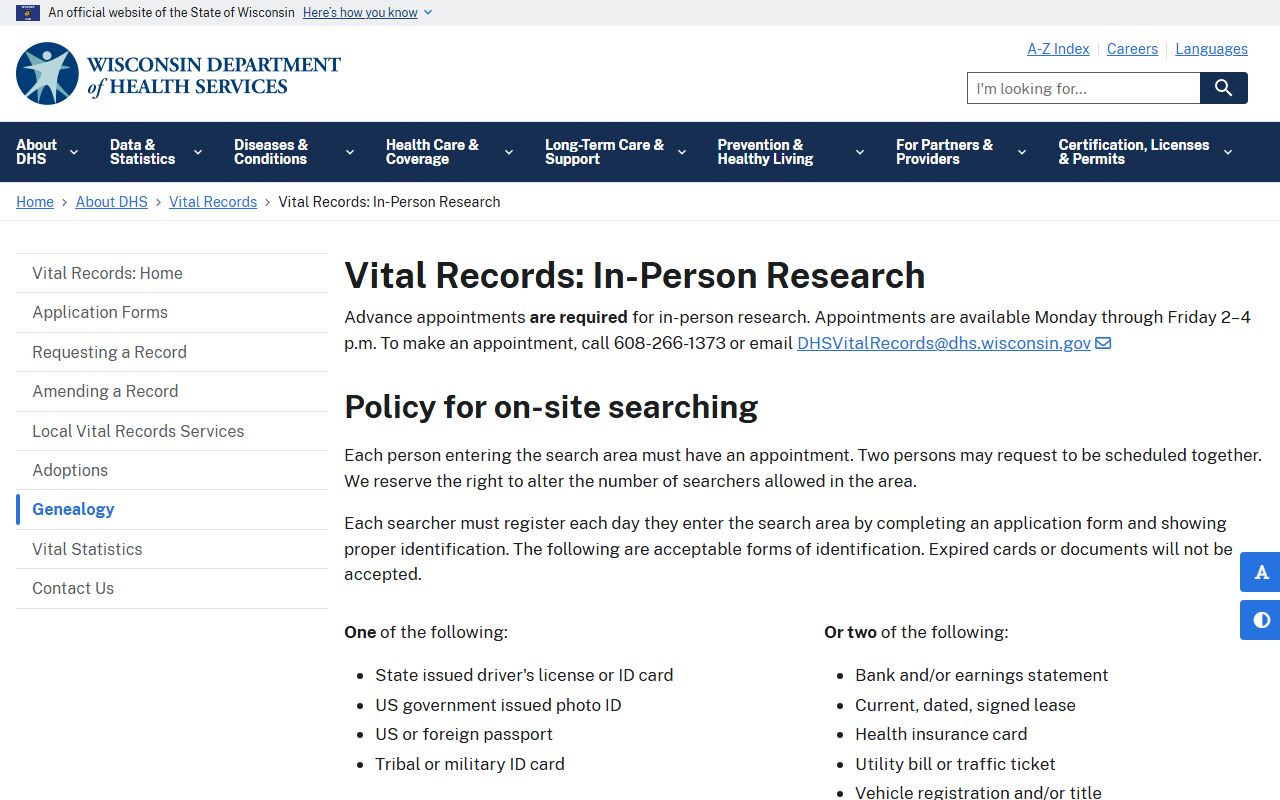
That image is useful because it shows the appointment and search rules that govern state-level Wisconsin Marriage Records research access.
Lead-in to the historical guide: the Wisconsin Historical Society page at wisconsinhistory.org/Records/Article/CS88 explains the pre-1907 Wisconsin Marriage Records collection.
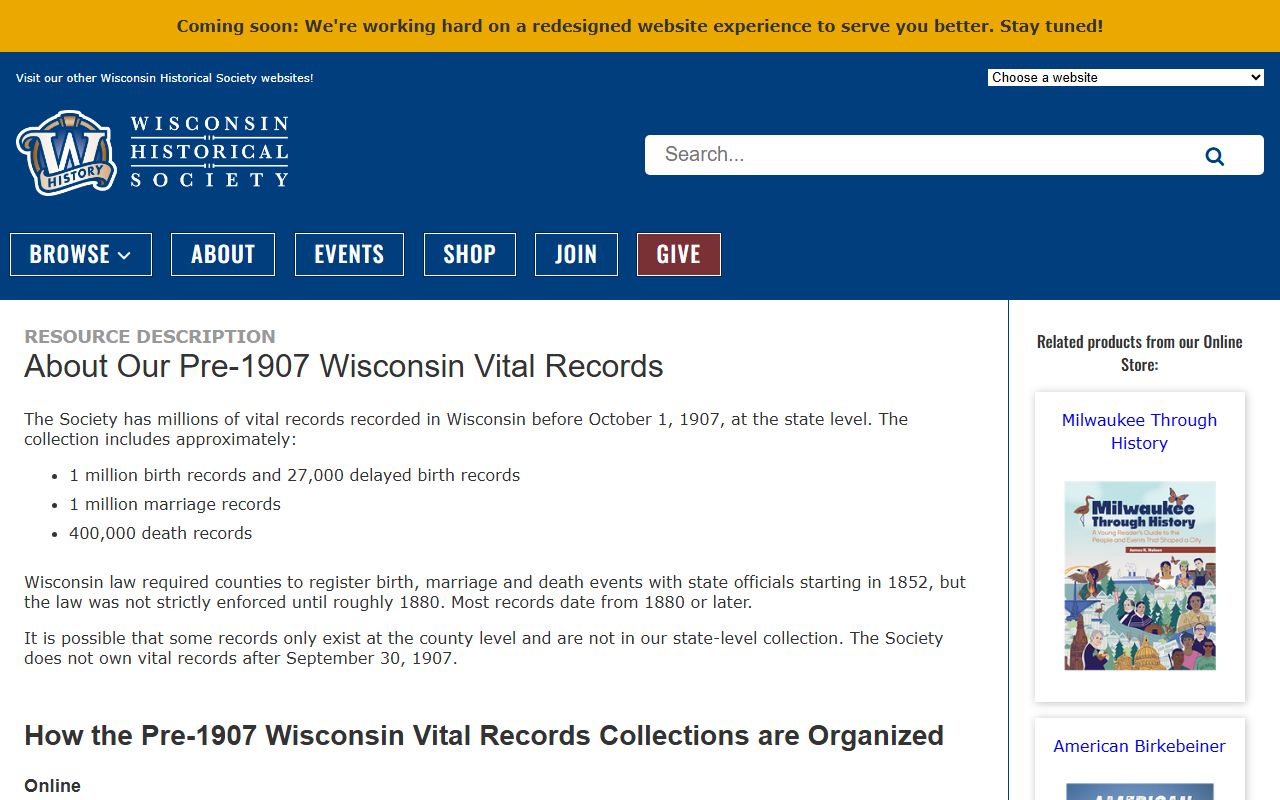
That image fits the history section because it is the main state source for pre-1907 Wisconsin Marriage Records searching and copy planning.
Lead-in to the collection overview: the Wisconsin Historical Society family-history page at wisconsinhistory.org/Records/Article/CS157 shows the scale of the state's older Wisconsin Marriage Records collections.
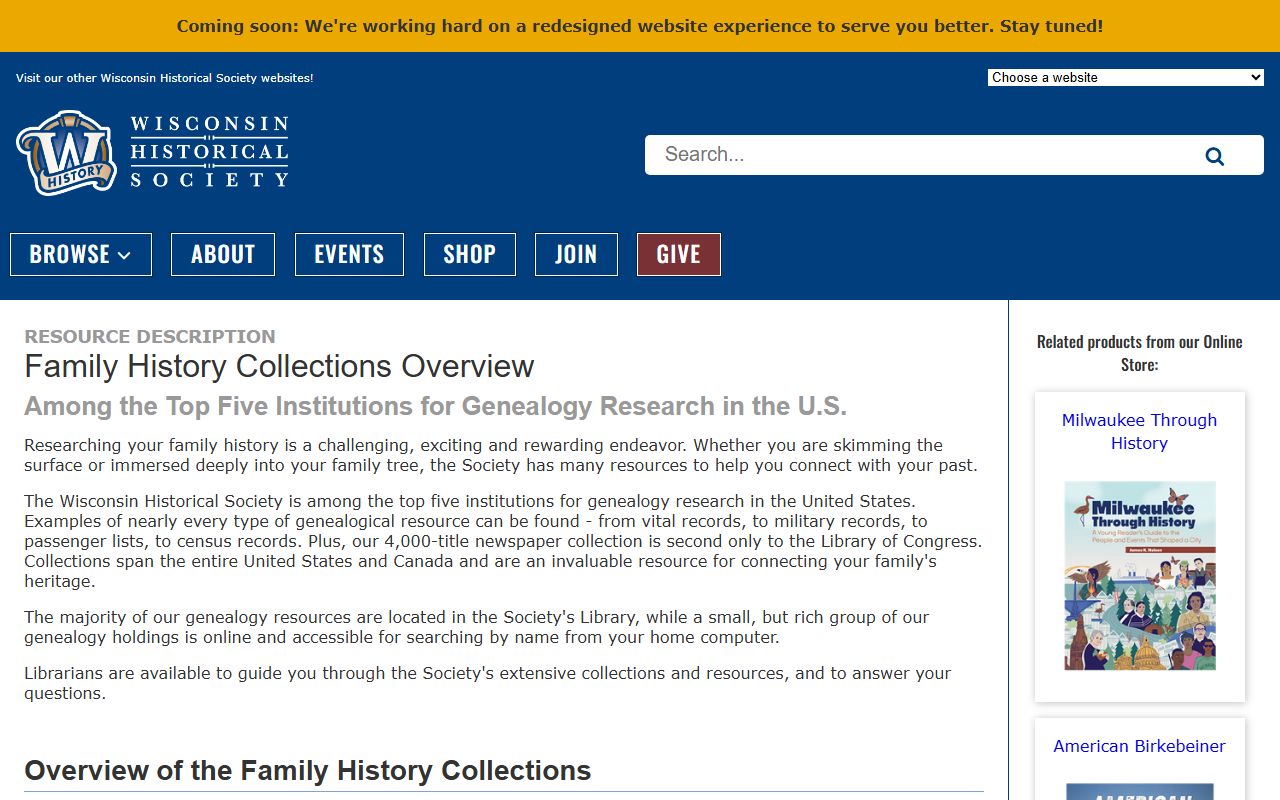
That image helps because it gives broad context for how deep the state historical collections run beyond a single county request.
Lead-in to the research-tips page: the Wisconsin Historical Society article at wisconsinhistory.org/Records/Article/CS1580 explains how to use the online Marriage Records Index.
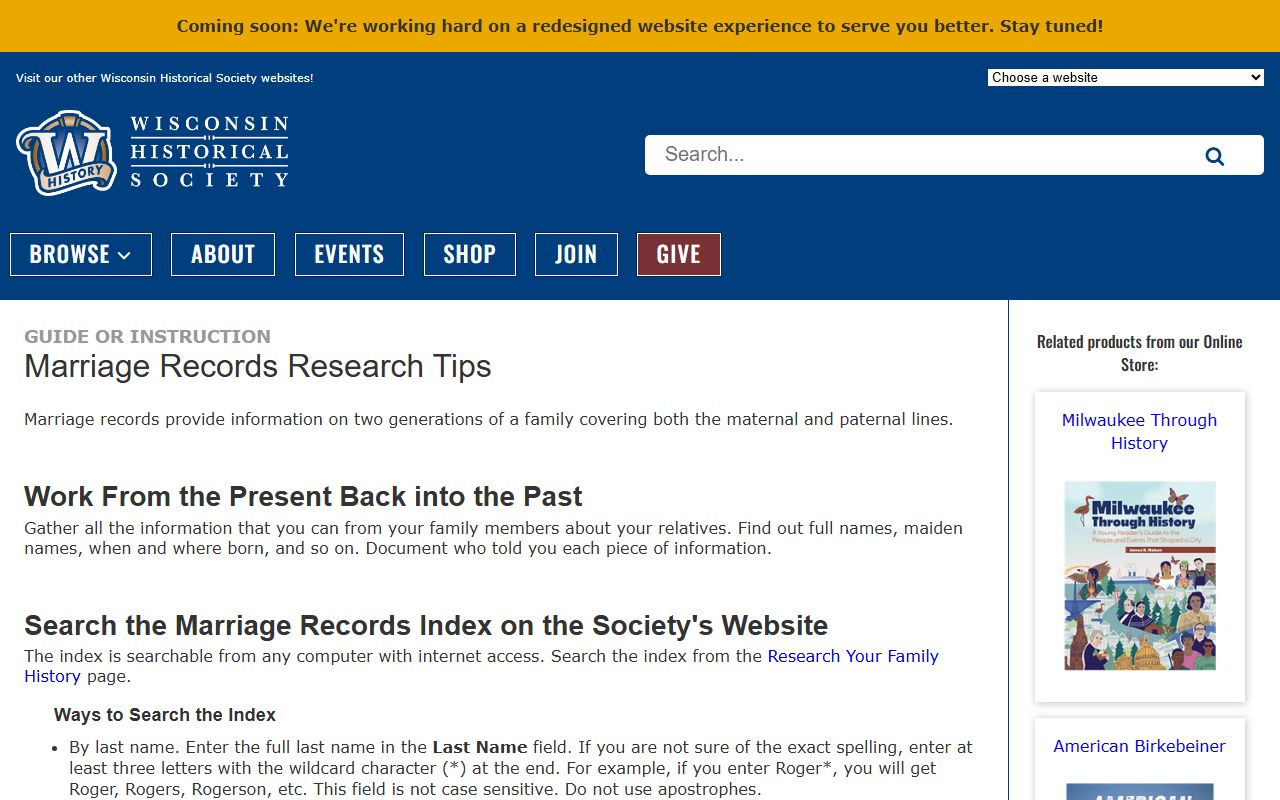
That image belongs here because the index tips often save time when a Wisconsin Marriage Records search starts with only a surname and a rough year.
Note: Pre-1907 Wisconsin Marriage Records often require an index-first search instead of a straight certificate request.
Wisconsin Marriage Records Requests
A practical Wisconsin Marriage Records request usually follows one of three tracks. The first track is local and modern. You know the county and the event was filed after October 1907, so a register of deeds office is the quickest fit. The second track is statewide and administrative. You need the Wisconsin Vital Records Office because the county is uncertain, the request is being mailed, or a wider search window is needed. The third track is historical. The marriage is older than the modern filing era, so the Wisconsin Historical Society becomes the lead source. Keeping those tracks separate prevents a lot of wasted time. Wisconsin Marriage Records are not hard to request once the correct track is chosen.
The same rule applies to the office list itself. County clerks issue marriage licenses. Registers of deeds issue most copies after filing. The two city health offices can issue some local vital records, but the state warns that not all records are always available there. If the event is recent and the county is known, the county office is often enough. If the event is old, common-name heavy, or difficult to place, the state office and historical guides become more important. Wisconsin Marriage Records searches are strongest when the requester sends one clean request to the right office instead of several weak requests to the wrong ones.
Wisconsin Marriage Records Offices
The office map stays simple once you break it down. County clerks handle marriage-license work before the ceremony. Registers of deeds handle the certificate side after the filed license becomes a record in the vital-records system. The Wisconsin Vital Records Office handles statewide requests and broader searches. Milwaukee and West Allis have city health offices that issue certain local vital records. Those are the core public offices behind Wisconsin Marriage Records. The hard part is usually not finding an office. It is choosing the right one first.
That is why this site is organized into county and city guides. County pages focus on the license desk, the register office, the local copy rules, and local contact points. City pages explain how residents of major cities fit into the county and state system while still using city clerk or city health information where it is relevant. Wisconsin Marriage Records can feel statewide and local at the same time. The state rules are shared. The office details still change from county to county and from city to city.
Wisconsin Marriage Records Guide
Use the county pages when you already know the county. Use the city pages when you know the place but need help connecting it to the right county office and record route. For broader searches, start with the state page, then move into the local guides once the county becomes clear. That is the shortest path through Wisconsin Marriage Records.
Browse Wisconsin Marriage Records by County
Each Wisconsin county has its own clerk and register structure for marriage licenses and certificates. Start with a county guide when you already know where the marriage record belongs.
Wisconsin Marriage Records in Major Cities
Major-city pages connect residents to the county clerk, register of deeds, and city office details that matter for Wisconsin Marriage Records.