
Find Taylor County Marriage Records
Taylor County Marriage Records are easiest to handle when you start with the right office and the right time frame. The County Clerk handles marriage license work, while the Register of Deeds handles copies and record requests. If you already know the couple name, a rough date, or the place where the marriage was filed, you can keep the search narrow from the start. That saves time and keeps you from bouncing between offices that do not hold the same part of the record trail.
Taylor County Marriage Records Office
The Taylor County Clerk says marriage license applications are handled at the County Clerk's Office during courthouse hours, Monday through Friday from 8:30 a.m. to 4:00 p.m. That matters because the office runs on a courthouse schedule, not a drop-in schedule. The clerk page also sets out the basic rules for who may marry. Adults 18 and older may marry on their own. Applicants age 16 to 18 need consent. The county does not require county residency, but one applicant must be a Wisconsin resident for 30 days before the license is issued.
Those rules are tied to the local application process. Both applicants sign before the clerk. The office wants proof of current address, a certified birth certificate, and proof of how any prior marriage ended. Taylor County also notes the 3-day waiting period and the possible $20 waiver. The license is valid for 60 days, so the calendar matters. The witnesses must be 18 or older, which is easy to miss if a couple starts planning late in the day.
For the county source, start with Taylor County Clerk marriage license requirements. It is the clearest local page for the full license path.
Lead-in to the Taylor County image: the Wisconsin State Law Library county page at Taylor County legal resources lists the county clerk, Register of Deeds, and court contacts together.
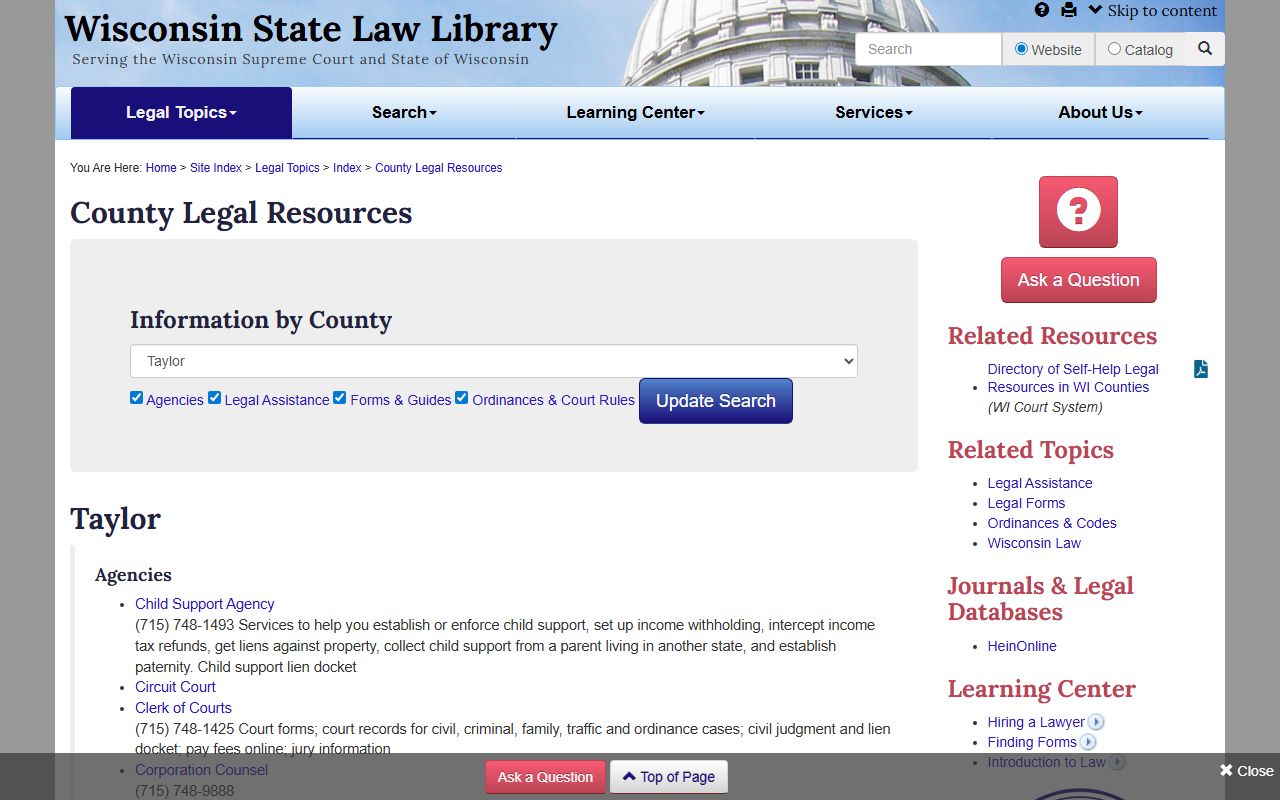
That directory is useful when you want the office split in one place before you call or visit.
The law library page also gives the main phone numbers. Taylor County lists the County Clerk at 715-748-1460, the Register of Deeds at 715-748-1483, the Clerk of Courts at 715-748-1425, and the Register in Probate at 715-748-1435. Those numbers help when you need to move from a marriage license question to a court or probate question without guessing which desk holds the file.
Taylor County Marriage License Rules
Taylor County keeps the license rules plain. There is no county residency requirement. There is a Wisconsin residency requirement for one applicant. There is also a waiting period unless the clerk approves a waiver. That combination is why couples should check the county page before they plan a same-day ceremony. A license can be valid and still not ready the moment you want it.
The office also wants proof before the clerk signs. A current address helps show where each person lives. A certified birth certificate proves identity and age. A prior marriage termination record shows that the person is free to remarry. When those pieces are ready, the visit goes faster and the clerk can complete the application without sending anyone back for another document.
Age is another key point. Adults 18 and older may marry. Applicants age 16 or 17 need consent. Taylor County also says witnesses must be at least 18. That is a small rule, but it matters on the wedding day and it matters when you ask a friend or relative to stand in as a witness.
For a quick local review, the clerk page at co.taylor.wi.us/county-clerk/marriage-license stays the best place to confirm the county steps before you go in.
Note: Taylor County says the license is valid for 60 days, so the ceremony date should stay inside that window.
Taylor County Marriage Records Copies
The Taylor County Register of Deeds page says copies of birth, death, marriage, and divorce certificates are available there. It also says the statewide issuance range for marriage records runs from October 1, 1907 to the present. That is an important line for anyone searching a long family span, because it tells you where the county file begins and where the state rules pick up the record trail. Taylor County also says in-person requests must arrive by 4:00 p.m. for same-day purchase.
Mail requests have their own rule. The county says USPS Priority Mail is required for return of certificates by mail. That detail sounds small, but it saves time and avoids a stalled request. The same office page also lists land record tools, which tells you the Register of Deeds is a broad records office, not only a vital-records desk. If your search started with marriage records and drifted into land or family history, the same office still makes sense.
For the county copy page, use Taylor County Register of Deeds. It is the direct office source for marriage record copies and other vital records work.
Lead-in to the state image: the Wisconsin Department of Health Services record instructions at Wisconsin DHS record request instructions explain the state-level mail, online, and phone paths for marriage records.
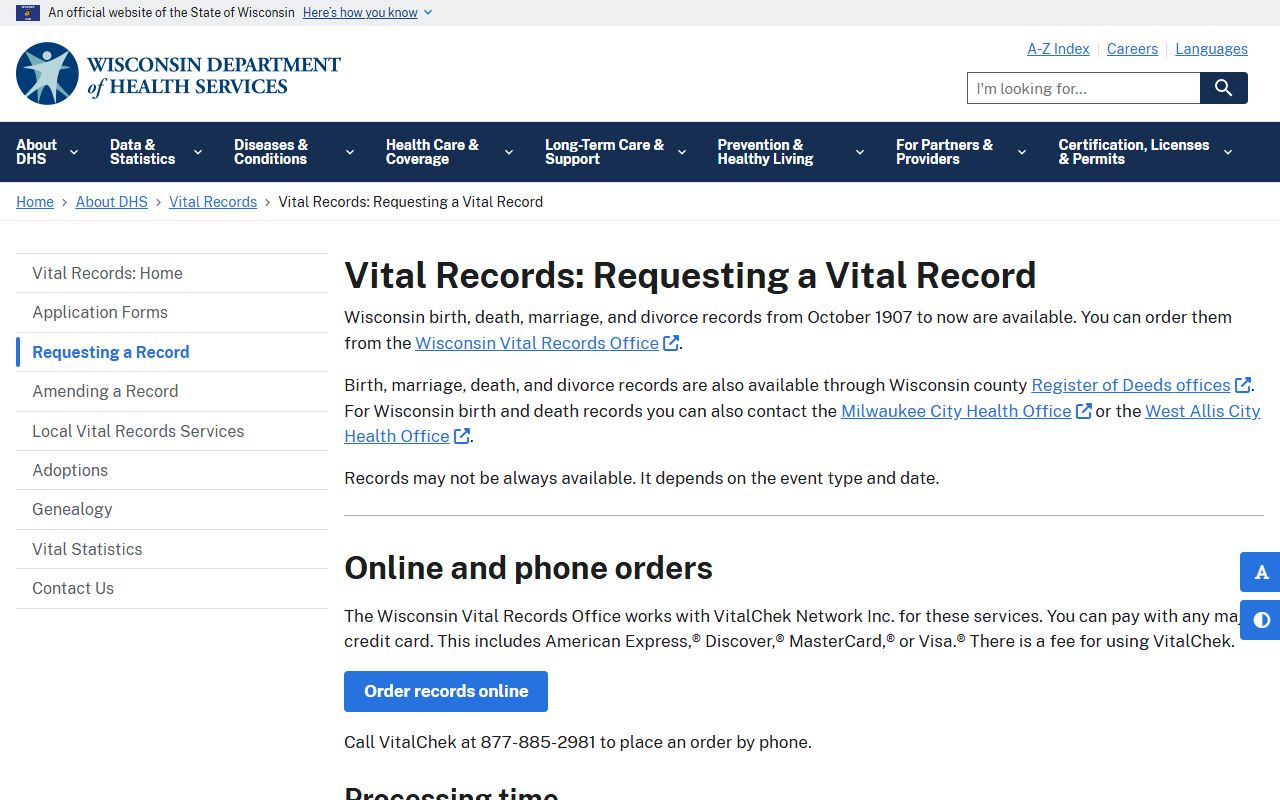
That state page is the clean backup when you want the broader request rules in view.
When you compare the county and state pages, the request path stays simple. Taylor County handles the local copy. The state explains the broader request structure. Together they show where to go when you need a copy fast and where to go when the request needs a different route.
Wisconsin Marriage Records Help
The Wisconsin State Law Library page is useful because it puts Taylor County offices in one directory. That includes the clerk, the register, the clerk of courts, and probate contact numbers. It is a good map when your search starts local but needs a second office. The county page and the law library page work well together because one explains the license path and the other shows the office structure.
The state vital records system fills the rest of the picture. If you need a certified copy and the county office is closed, the official state instructions can show the mail route. If you need to compare the local file against the statewide record range, the state site gives you the rules in one place. That is useful for older marriages, for records that may have been filed elsewhere, and for people who only know the couple name and not the exact date.
For the broad state source, see Wisconsin DHS vital records. For the county source, keep Taylor County Register of Deeds and Taylor County Clerk marriage license requirements close at hand. Those pages cover the main local steps without sending you through a third-party maze.
Note: A marriage license and a marriage certificate are different records, so check the clerk page for the license and the Register of Deeds page for the copy.